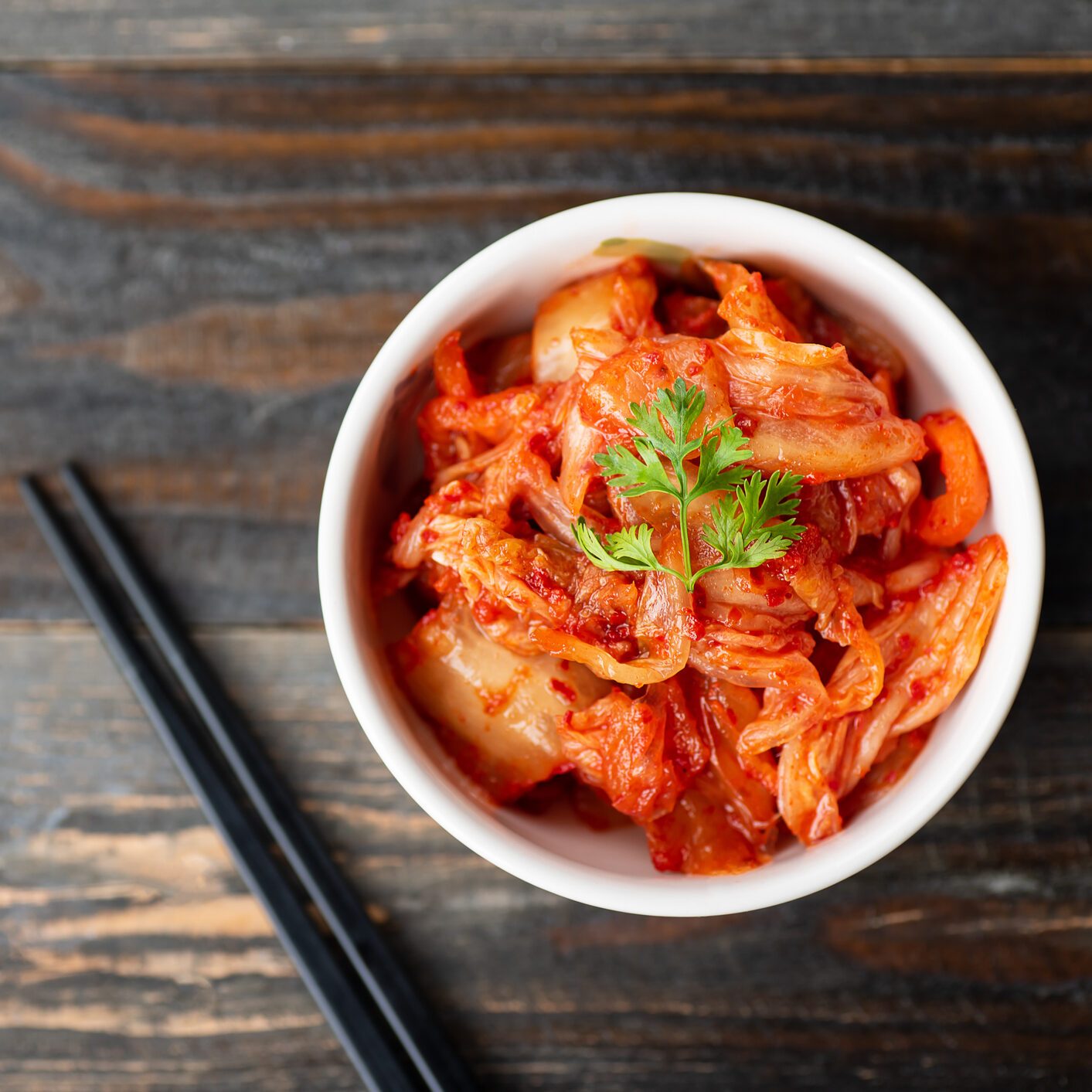
You may know it as a spicy Korean staple, but is kimchi good for you? Besides bringing bold flavor to the table, this fermented food contains beneficial nutrients that can boost gut health to keep your body feeling its best.

Aids Digestion
Kimchi is a fermented food, which means it’s loaded with good bacteria (aka probiotics) that can help your digestive system run smoothly. These beneficial bugs create a healthy gut environment, which makes it easier for your body to break down food and absorb nutrients. Plus, the cabbage in kimchi contains fiber, and consuming high-fiber foods will help keep you regular.

Supports Healthy Blood Sugar
Eating balanced meals that support blood sugar levels is important for everyone, not just people with diabetes. Rapid dips and spikes in blood sugar can lead to food cravings, low energy levels and contribute to long-term health concerns like weight gain and heart disease.
Because kimchi is made with fiber-rich vegetables, it may help keep blood sugar steady after meals. Fiber slows the movement of food through the digestive system, helping maintain more even energy throughout the day. Recipes like kimchi cauliflower fried rice create high-fiber, low-carb meals that are perfect for supporting healthy blood sugar.
Boosts Immunity
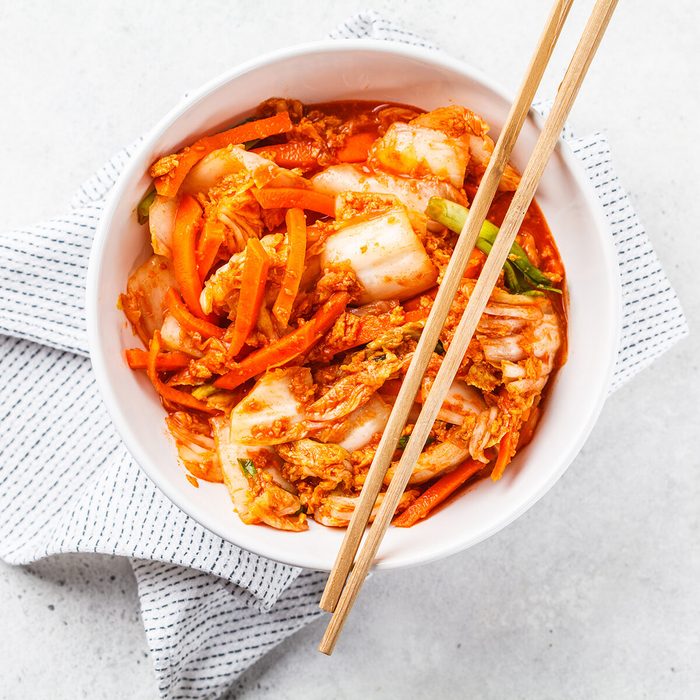
Kimchi can give your immune system a little extra support thanks to its probiotic content. Your immune system is connected to your gut, so keeping your digestive system healthy can help your body fight off germs. Kimchi may even help with seasonal sniffles by improving your body’s response to common allergy triggers. Plus, the seasonings in kimchi include garlic and ginger, which deliver antioxidants that help keep you healthy year-round.
Supports Heart Health
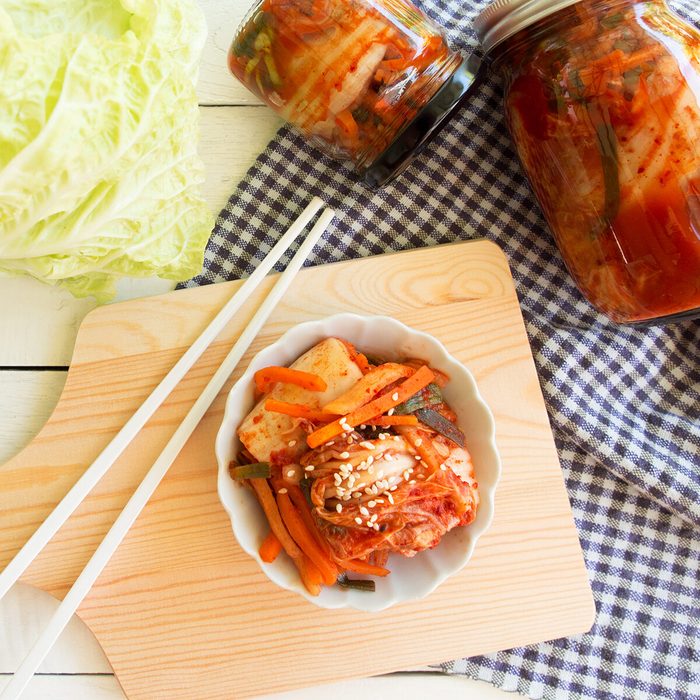
Kimchi can be a heart-healthy food because it’s loaded with nutrient-rich fermented veggies. Research suggests that including fermented foods in your diet may help support healthy cholesterol levels and naturally improve blood pressure. Plus, ingredients like garlic and chile peppers contain compounds linked to heart health, making kimchi a tasty way to give your heart a little extra love.

Fights Inflammation
Kimchi is rich in antioxidants that can help your body fight inflammation, keeping you healthy and feeling your best. Keeping inflammation in check can help minimize signs of aging, strengthen your immune system and reduce the risk of chronic health problems. While no single food is a cure-all, kimchi is a tasty way to make healthy meals even more enjoyable while supporting overall wellness.

Supports Weight Management
Kimchi is low in calories and a good source of fiber, making it a helpful addition to low-calorie meals if you’re trying to lose or maintain weight. It’s also packed with flavor, which can make simple meals feel more satisfying.
The fiber and probiotics in kimchi can also help you feel full for longer—great for curbing cravings and mindless snacking. The chili peppers in spicy versions may even give metabolism a subtle boost.

Supports Brain Health
The bacteria in your gut are closely linked to brain function and mood. That means eating kimchi regularly supports digestion and may give your brain a boost, too. Plus, the vegetables and seasonings in kimchi provide vitamins and antioxidants that can help support focus, energy and overall mental well-being. I know I would feel better after sinking my teeth into a cheesy Korean chicken crunch wrap!

Kimchi Health Benefits FAQ
Are there any side effects of eating kimchi?
Kimchi is generally safe and healthy for most people to eat daily, but there are a few potential side effects to keep in mind. Because it’s fermented and seasoned with salt, kimchi can be high in sodium. Enjoying smaller portions is a smart choice if you’re watching your salt intake.
Some people may experience bloating or digestive discomfort when they first start eating fermented foods. It may help to start with small portions and gradually increase how often you enjoy kimchi. That may mean eating it every few days instead of daily or using it as a condiment rather than eating it on its own.
How do you eat kimchi?
Kimchi is incredibly versatile and can be enjoyed on its own or mixed into a variety of dishes, making it easy to work into everyday meals. It’s traditionally used to make dishes like kimchi stew and kimchi fried rice, but kimchi isn’t just for Korean recipes. You can also use it like a zippy salsa and add a spoonful or two on top of grain bowls, scrambled eggs, omelets and tacos. Or let it shine in dishes that put the fermented veggie mix in the spotlight, like ooey-gooey kimchi grilled cheese or loaded kimchi fries.
Where can you buy kimchi?
Kimchi used to be sold only at Asian markets and specialty food shops, but today you can find it at most grocery stores. Look for it in the refrigerated section near other fermented foods like pickles or sauerkraut. Many brands also sell kimchi online, making it easy to explore different styles and spice levels. If you’re new to kimchi, start with our editors’ favorite kimchi brands.