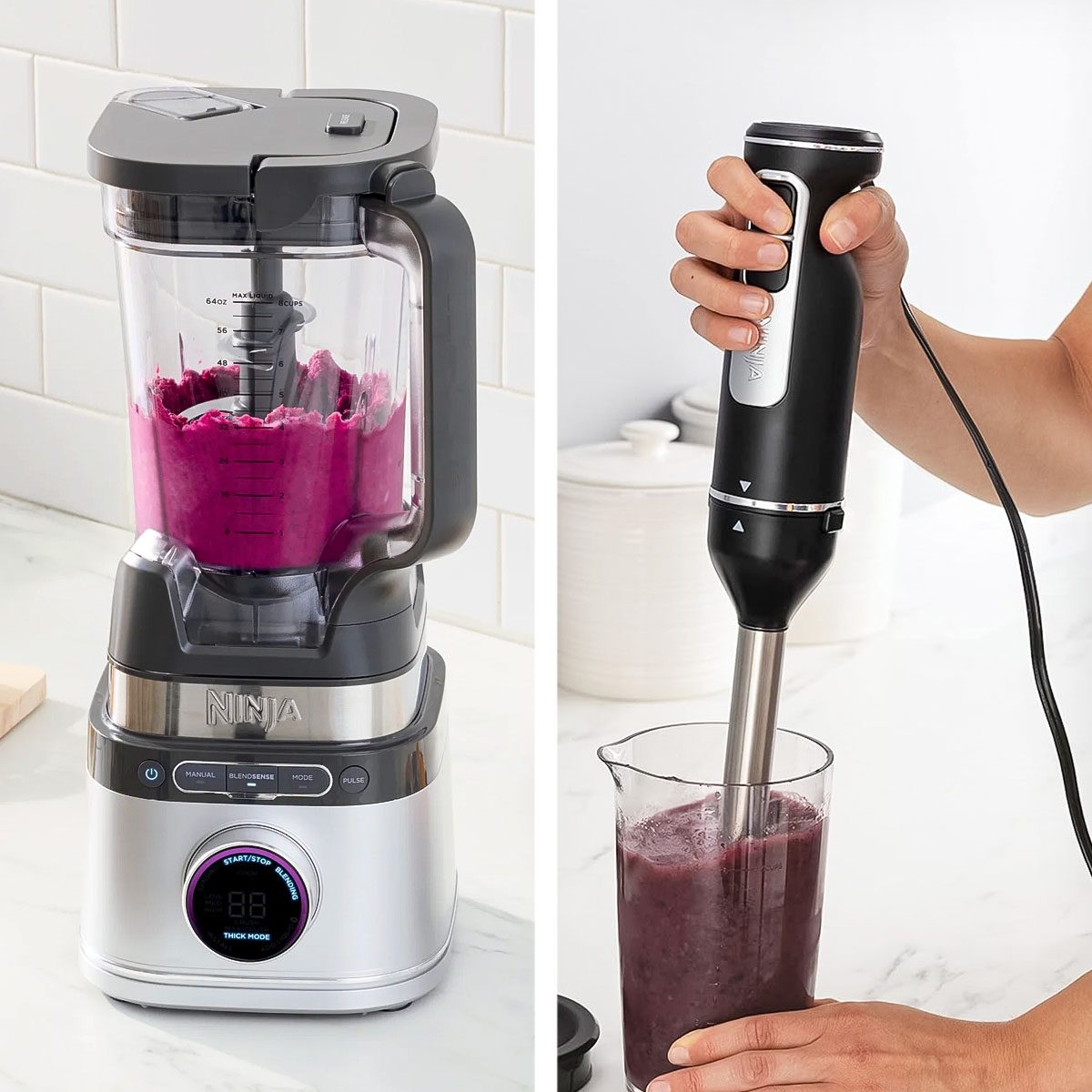
If "immersion blender vs. blender" is the matchup on your mind, use this guide to figure out exactly what you need.
Our editors and experts handpick every product we feature. We may earn a commission from your purchases.Learn more.
Shopping for a new blender? Don’t rush to buy a traditional blender right away. First, compare a countertop blender with an immersion blender to see if a smaller model will suit your needs.
Read on for the difference between types of blenders and our recommendations for the best blenders.
sydney watson/taste of home
What is a countertop blender?
When you think of a blender, your mind probably goes to a countertop model. That is, a lidded pitcher mounted on a motorized base that makes the blades spin inside the pitcher.
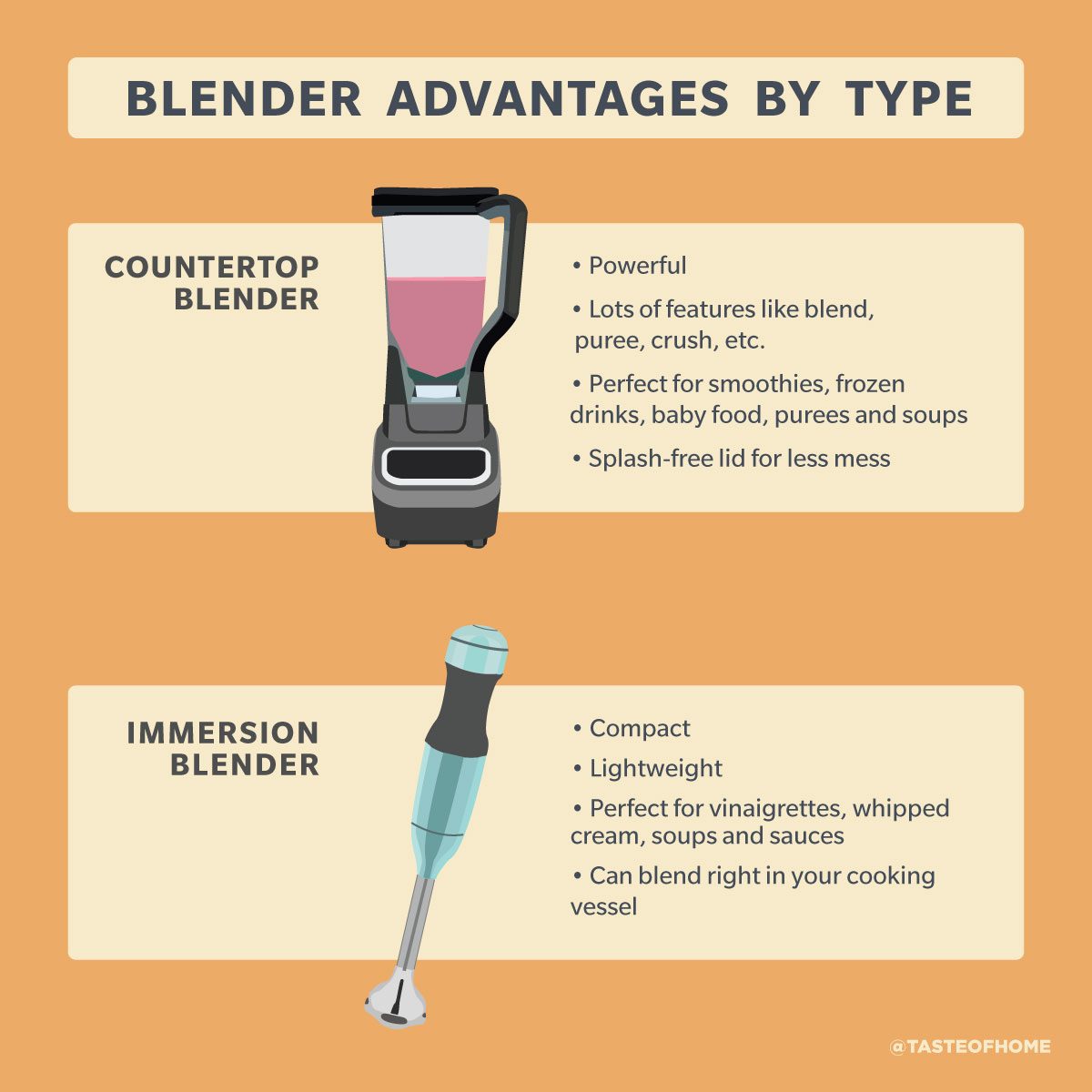
These larger blenders—like those made by Vitamix—often have many settings, including puree, blend, chop and even crush ice for frozen drinks. Features like these make countertop blenders the go-to tool for making homemade smoothies, purees and smooth soups.
Contrary to popular belief, cleaning a blender is easy, so don’t hesitate to plug yours in whenever it’s needed.
Pros
Powerful
Versatile, thanks to multiple speeds and features
Splash-free blending
Super smooth results
Cons
Takes up valuable kitchen space
Pricey
On Sale
EMIKO FRANZEN FOR TASTE OF HOME
Best Overall
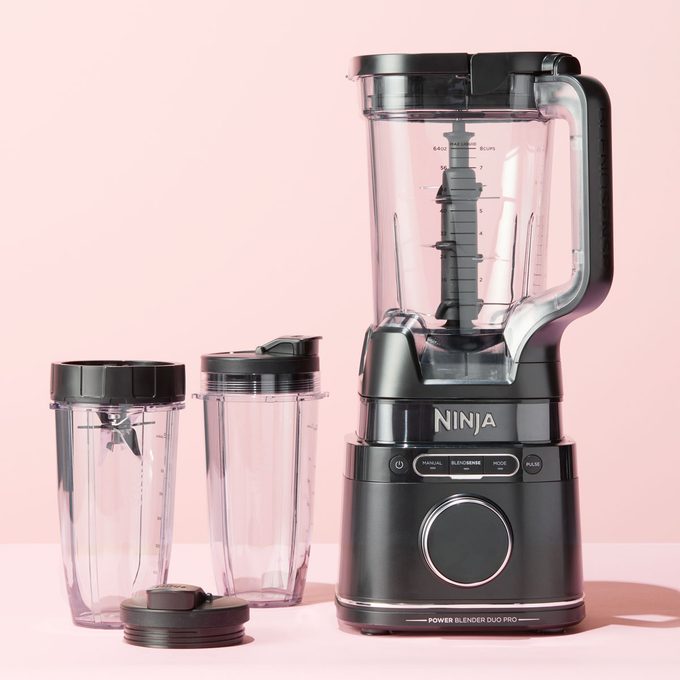
Ninja Detect Duo
Pros:
Smart BlendSense setting
Three-tiered removable blade
Included single-serving pitchers
Safety features
7-year warranty
Great value
Easy to clean
Cons:
Large
Not as suitable for small yields
What is an immersion blender?
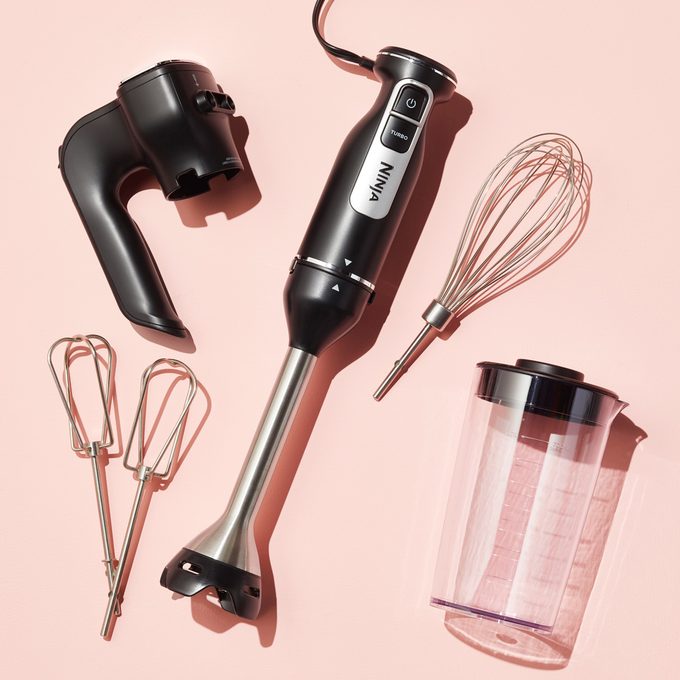
Buying an immersion blender—also known as a stick or hand blender—is another option. These gadgets are smaller than their countertop counterparts. They consist of a motorized handle with an easy-to-clean, detachable blending mechanism. Some models include extra attachments like whisks or even small food processors.
Immersion blenders are suited to a wider variety of tasks than traditional blenders. Because they’re compact, they’re ideal for making small-batch recipes like vinaigrettes and other homemade salad dressings.
Stick blenders also work well to smooth out sauces and soups. With this gadget, there’s no need to transfer the recipe to a pitcher or bowl; you can blend it right in your Dutch oven. In general, handheld blenders work best with softer ingredients, so don’t try to crush ice with one of these!
Pros
Affordable
Compact and easy to store
Easy to clean
Ideal for small jobs
Can blend right in your cooking vessel—no need to transfer to a pitcher
Cons
Can’t chop, crush, etc.
Not as powerful as countertop models
EMIKO FRANZEN FOR TASTE OF HOME
Best Overall
Ninja Foodi Power Mix System
Pros:
Hand-mixer attachment and multiple accessories
Dishwasher-safe
Top performer in all tests
Various speed settings
Maneuverable
Cons:
A little messy
Some arm fatigue
Which type of blender is best?
To choose between an immersion blender and a traditional blender, consider your needs. If you make lots of smoothies, baby food, frozen drinks or big batches of soup, we recommend a powerful countertop model.
If you don’t reach for a blender very often, pick up a less expensive immersion blender. You can still blend ingredients in soups and sauces, but you won’t need to sacrifice a ton of storage space.
This being said, the right solution for you might be to have one of each type. Both are incredibly useful gadgets that can be awfully fun to use!
We are no longer supporting IE (Internet Explorer) as we strive to provide site experiences for browsers that support new web standards and security practices.