
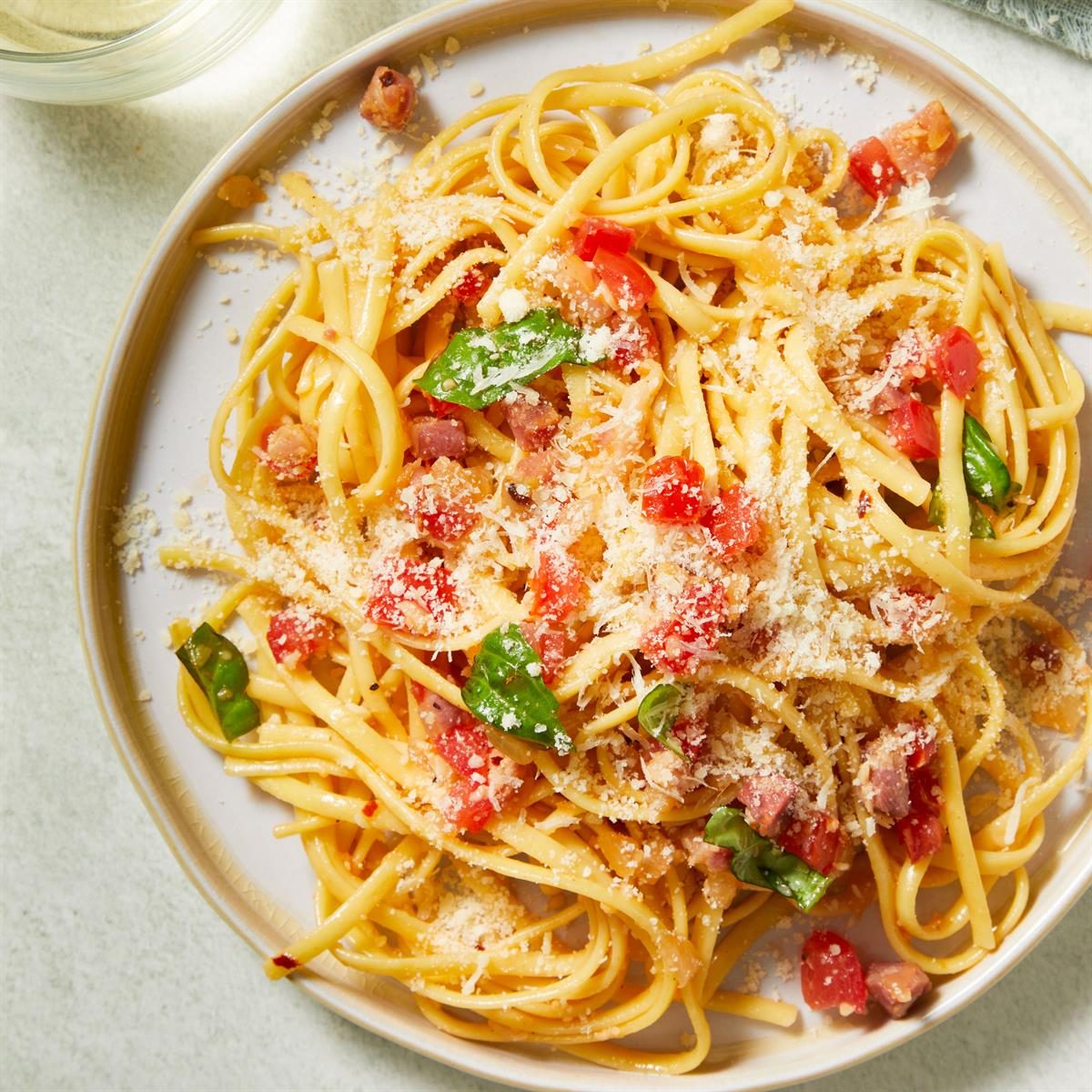
This recipe for pancetta pasta is rich, glossy and savory in the way only cured pork can be.
Pancetta pasta exists to remind us that pasta never has to be boring and that cured pork is the magic we’ve been missing. Pancetta is like bacon, only with less smoke and more silky, salty depth that melts into pasta as if it were born for the job.
Taste of Home recipe developer Maggie Knoebel renders pancetta for its flavorful fat, then adds garlic, tomatoes and Parmesan for a craveable sauce that clings to every strand and makes each bite better than the last. This recipe for pancetta pasta isn’t just dinner; it’s a master class in how a few bold ingredients can turn a simple bowl of noodles into an easy pasta recipe that’s deeply, unapologetically delicious.
Pancetta Pasta Ingredients
- Linguine: A long, flat pasta shape like linguine ensures every bite gets a little pancetta, tomato and cheese action.
- Pancetta: Pancetta is an Italian, seasoned, aged, salt-cured pork belly. Unlike American bacon it’s not smoked, but it adds the savory backbone to this dish. Pancetta is known for its thick fat cap, and as it cooks, the fat cap renders down, becoming the base of the entire sauce.
- Onion: A finely chopped onion softens and sweetens as it cooks, balancing pancetta’s saltiness and adding depth without overpowering the other ingredients.
- Olive oil: Olive oil keeps the pancetta and onion from sticking. It also adds a subtle richness that rounds out the sauce.
- Garlic: Minced garlic adds aromatic warmth and classic Italian flavor, but don’t overcook it; it can turn bitter.
- Plum tomatoes: Plum tomatoes are the best type of tomato for this dish, adding fresh, juicy acidity that cuts through the richness of the pancetta. Don’t have plum tomatoes on hand? Feel free to sub in other varieties.
- Crushed red pepper flakes: Red pepper flakes add gentle heat as a nice contrast to the rich pancetta.
- Salt: Salt enhances all the flavors already working hard in this recipe. A little goes a long way since pancetta and Parmesan bring their own saltiness.
- Pepper: Pepper adds a mild bite and earthy flavor. Freshly ground pepper works exceptionally well here.
- Parmesan cheese: Grated Parmesan adds a nutty, salty richness. It also helps bind the sauce and gives it a creamy note without adding cream.
- Fresh basil: Fresh basil adds brightness and a pop of herbal flavor at the end. It’s the final touch that makes the dish feel fresh and complete.
Directions
Step 1: Cook the pasta
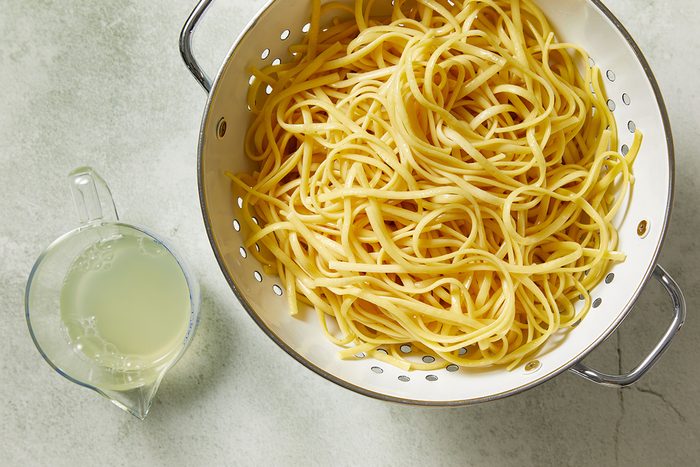
Cook the linguine according to the package directions. Drain, reserving 1/3 cup pasta water.
Editor’s Tip: Pasta water is liquid gold. The starch helps create a silky sauce that coats the noodles rather than sliding off.
Step 2: Build the sauce
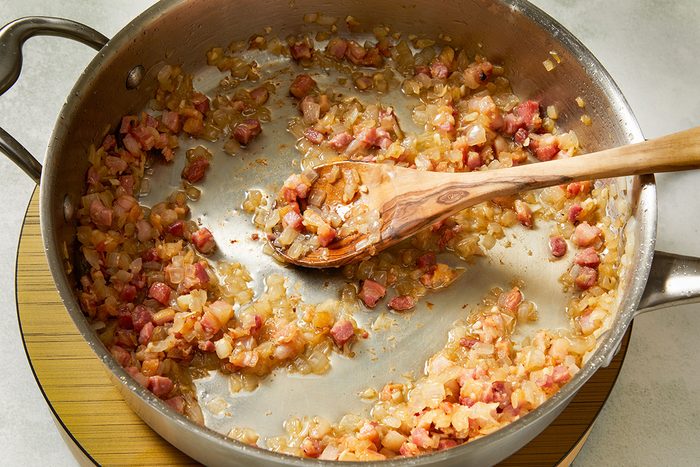
Meanwhile, in a large skillet, cook pancetta and onion in oil over medium heat until onion is tender. Add the garlic and cook one minute longer.
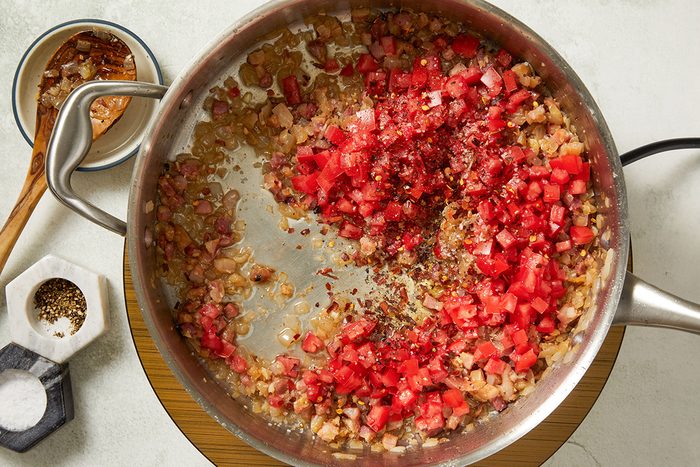
Stir in the tomatoes, red pepper flakes, salt and pepper.
Step 3: Combine everything
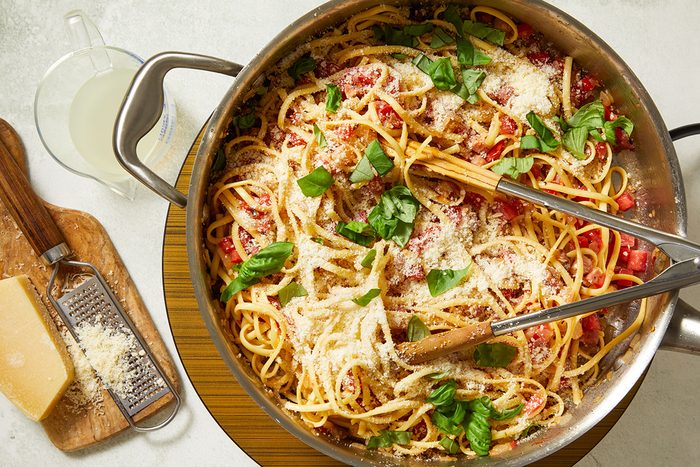
Add the cooked linguine, Parmesan and basil to the skillet. Add enough reserved pasta water to coat the pasta. Heat through.
Editor’s Tip: If the pasta seems dry, don’t panic. A splash more pasta water brings everything back to life.
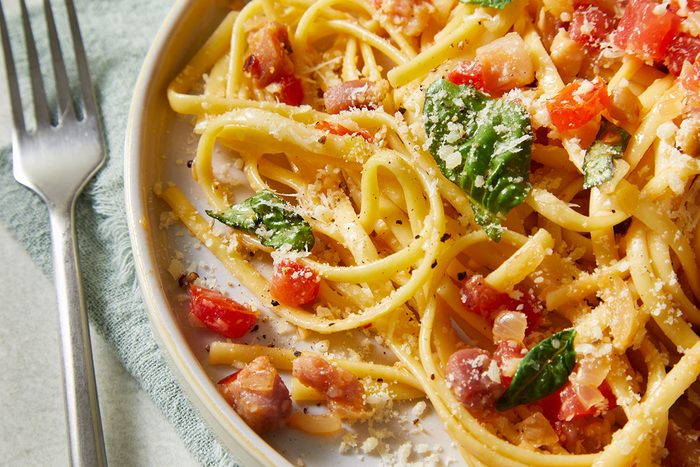
Pancetta Pasta Variations
- Head toward carbonara: Taking a cue from pasta carbonara, stir in a splash of heavy cream or half-and-half at the end for a silkier sauce that turns this recipe into a more indulgent pancetta pasta dish.
- Make it very veggie: Add sauteed mushrooms, spinach or zucchini for extra color and texture. These veggies pair naturally with pasta and pancetta without stealing the spotlight.
- Bring the heat: Increase the crushed red pepper flakes or add a pinch of Calabrian chile paste for bolder heat.
- Give it a cheesy upgrade: Use Parmigiano-Reggiano or Pecorino Romano for a sharper, saltier finish.
How to Store Pancetta Pasta
Store leftover pancetta pasta in an airtight container in the refrigerator once it has cooled. This recipe reheats well, making it a solid option for next-day lunches or easy dinners. If you’re planning ahead, you can also store the sauce separately and toss it with freshly cooked pasta later.
How long does pancetta pasta last?
This recipe for pancetta pasta lasts up to four days in the refrigerator when stored properly. The flavors actually deepen a bit as it sits.
How should you reheat pancetta pasta?
Reheat the pasta with pancetta gently on the stovetop or in the microwave, adding a splash of water or broth. This helps loosen the sauce and keeps the pasta from drying out.
Pancetta Pasta Tips
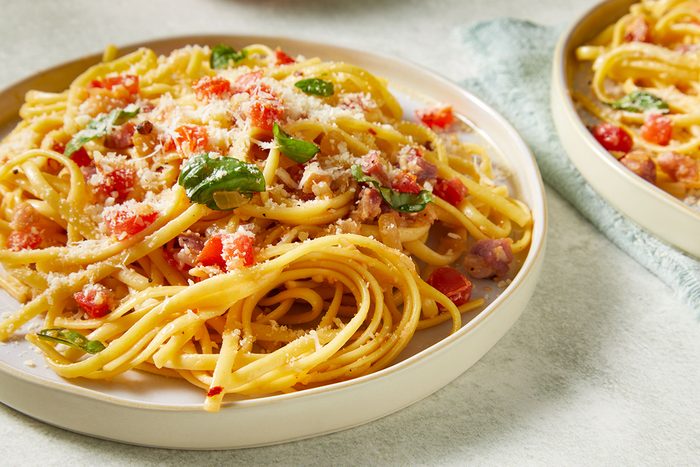
What’s a good substitute for pancetta?
A good substitute for pancetta is bacon, prosciutto or even diced ham. Swap in bacon for pancetta for a smokier flavor, noting it may be saltier.
What else can you serve with pancetta pasta dishes?
To go with the pancetta pasta, start with Italian appetizers like an antipasto platter. Follow that up with a gorgeous green bean salad and some focaccia barese to have a full-on extravaganza. And don’t forget the wine! A nice Nebbiolo would be a perfect pairing.
Ingredients
- 1 pound linguine
- 8 ounces cubed pancetta
- 1 large onion, finely chopped
- 2 tablespoons olive oil
- 3 garlic cloves, minced
- 4 plum tomatoes, seeded and chopped
- 1/2 teaspoon crushed red pepper flakes
- 3/4 teaspoon salt
- 1/2 teaspoon coarsely ground pepper
- 3/4 cup grated Parmesan cheese
- 1/4 cup roughly chopped fresh basil
Directions
- Cook pasta according to package directions. Drain, reserving 1/3 cup liquid.
- Meanwhile, in a large skillet, cook pancetta and onion in oil over medium heat until onion is tender. Add garlic; cook 1 minute longer. Stir in the tomatoes, red pepper flakes, salt and pepper.
- Add the linguine, Parmesan and basil to the skillet. Add enough reserved pasta water to coat pasta. Heat through.

Loading Popular in the Community
Loading Reviews

